Simple Plaster Facades
In the decades before, the dominant architectural style in German cities was Gründerzeit (founding period) historicism. Dense blocks of tenement houses with heavily ornamented façades shaped entire districts. These buildings were widely criticized, not only because they were associated with the authoritarian Kaiserreich, but also because they often offered poor living conditions. Many families lived together in cramped apartments with little light or fresh air.
After the war, the housing crisis made these problems impossible to ignore. Returning soldiers, continued urban growth, and widespread poverty created an urgent need for large numbers of affordable, functional apartments. Buildings had to be constructed quickly and cheaply, and they had to serve real living needs.
One response was a radical break with the overloaded historicist façade. Ornament was reduced or removed altogether. Instead, façades became flat, symmetrical, and plastered. Decoration gave way to proportion, rhythm, and clarity. This shift was one of the few points on which all architectural movements of the time could agree.
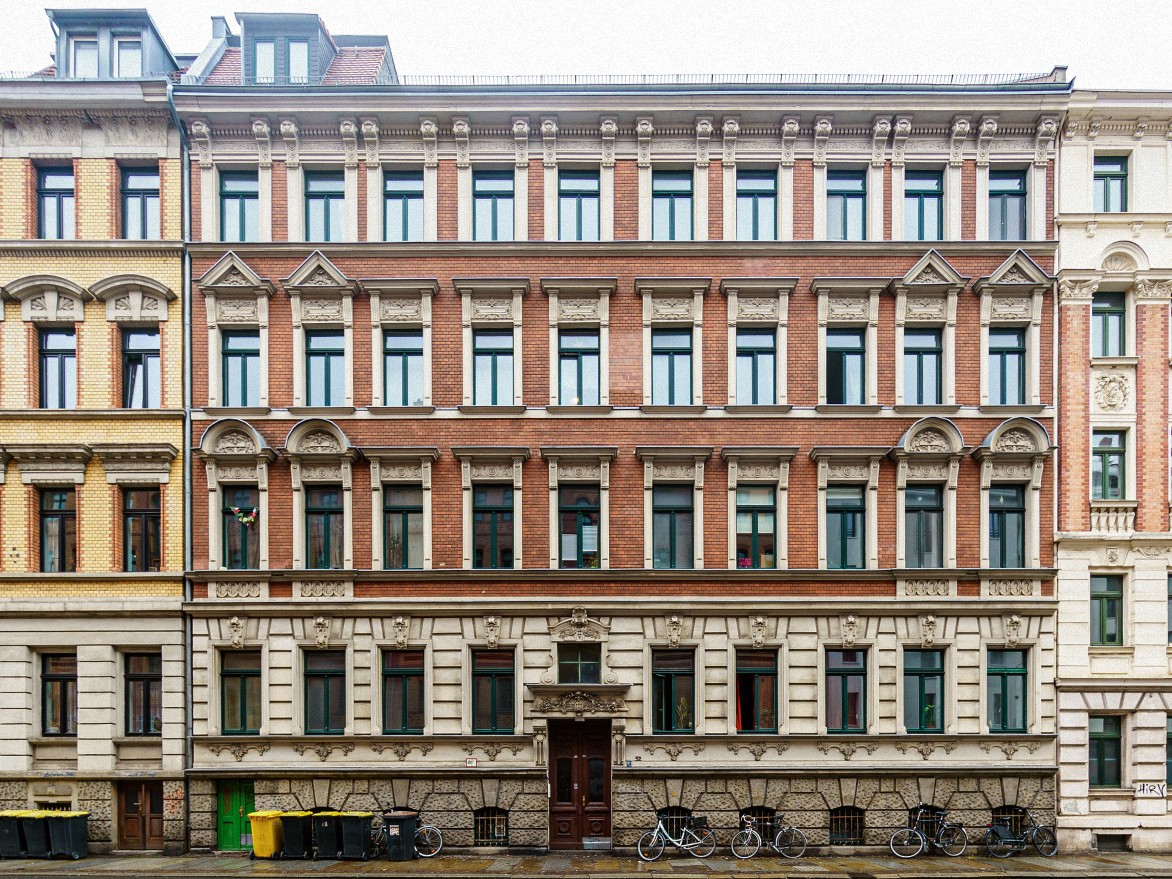
A typical Gründerzeit facade from around 1900 with dense historicist ornamentation
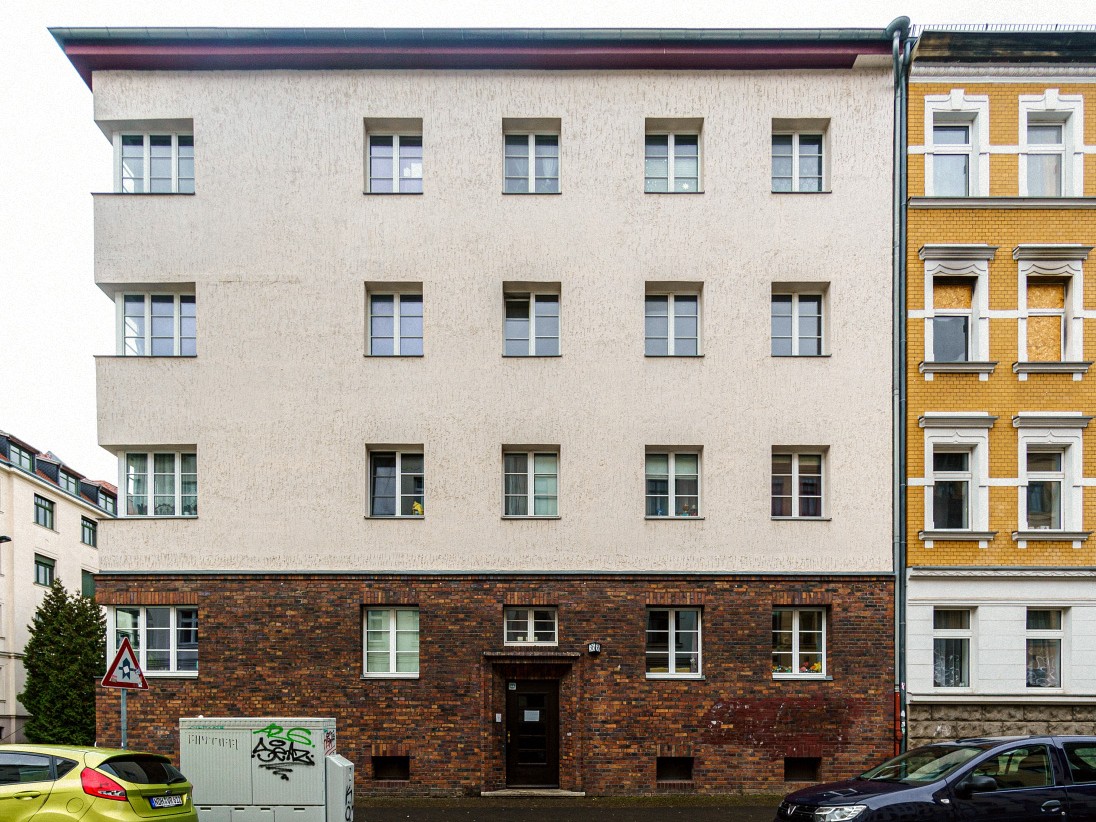
A simple plaster facade on a building from around 1925
Other characteristics: Clinker Bricks • Corner Windows
When speaking of simplicity, this does not mean untextured. Façades could be very smooth, as in avant-garde functionalist buildings, or deliberately rough. What changed was the absence of elaborate surface decoration, layered moldings, and historical motifs.
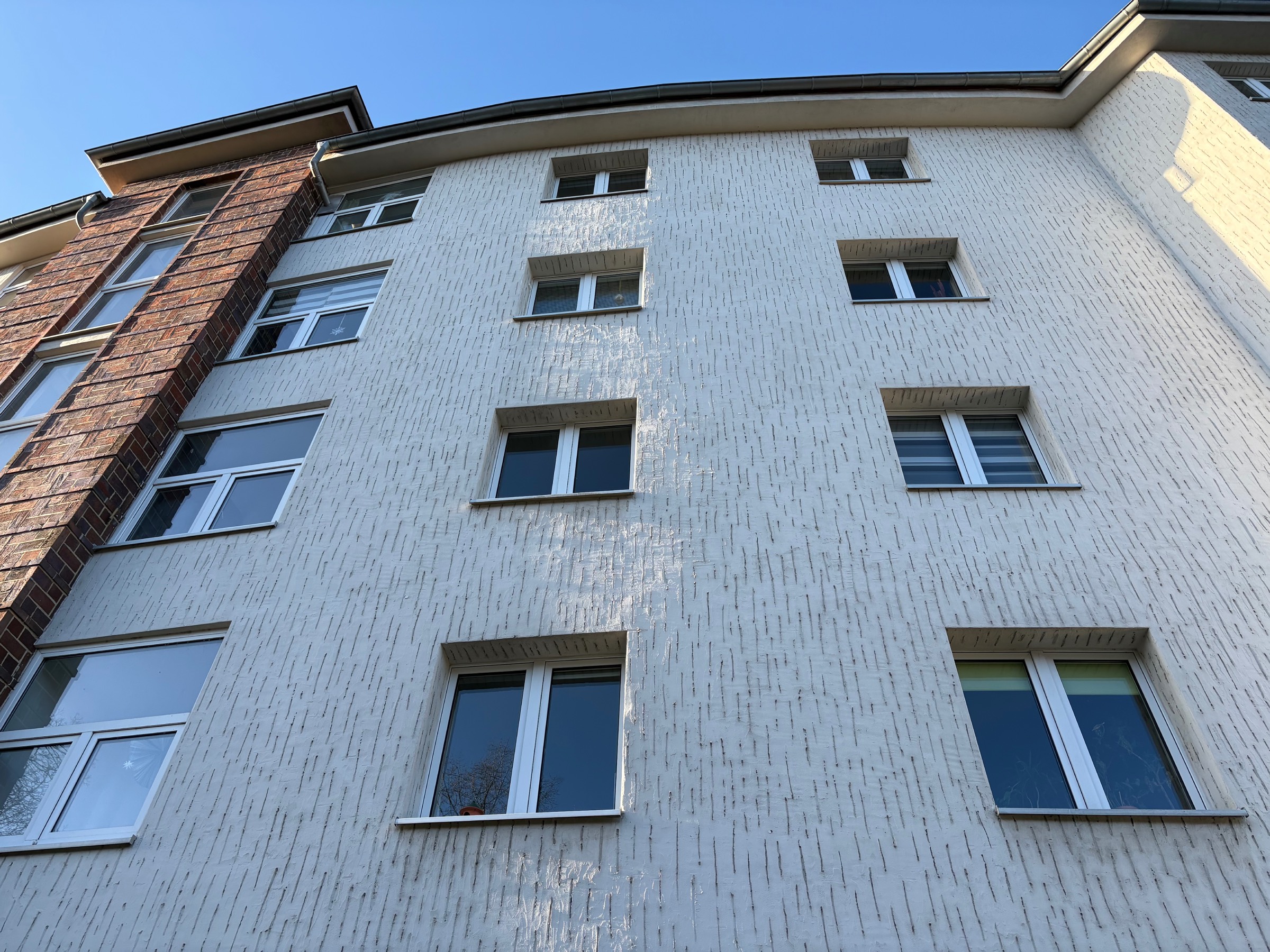
Rough plaster facade from 1935
Functionalism
Functionalist architecture pushed this principle the furthest. Buildings were reduced to large, calm surfaces, often in white or bright colors, with no ornament at all. The façade became an expression of construction and use, not of representation.
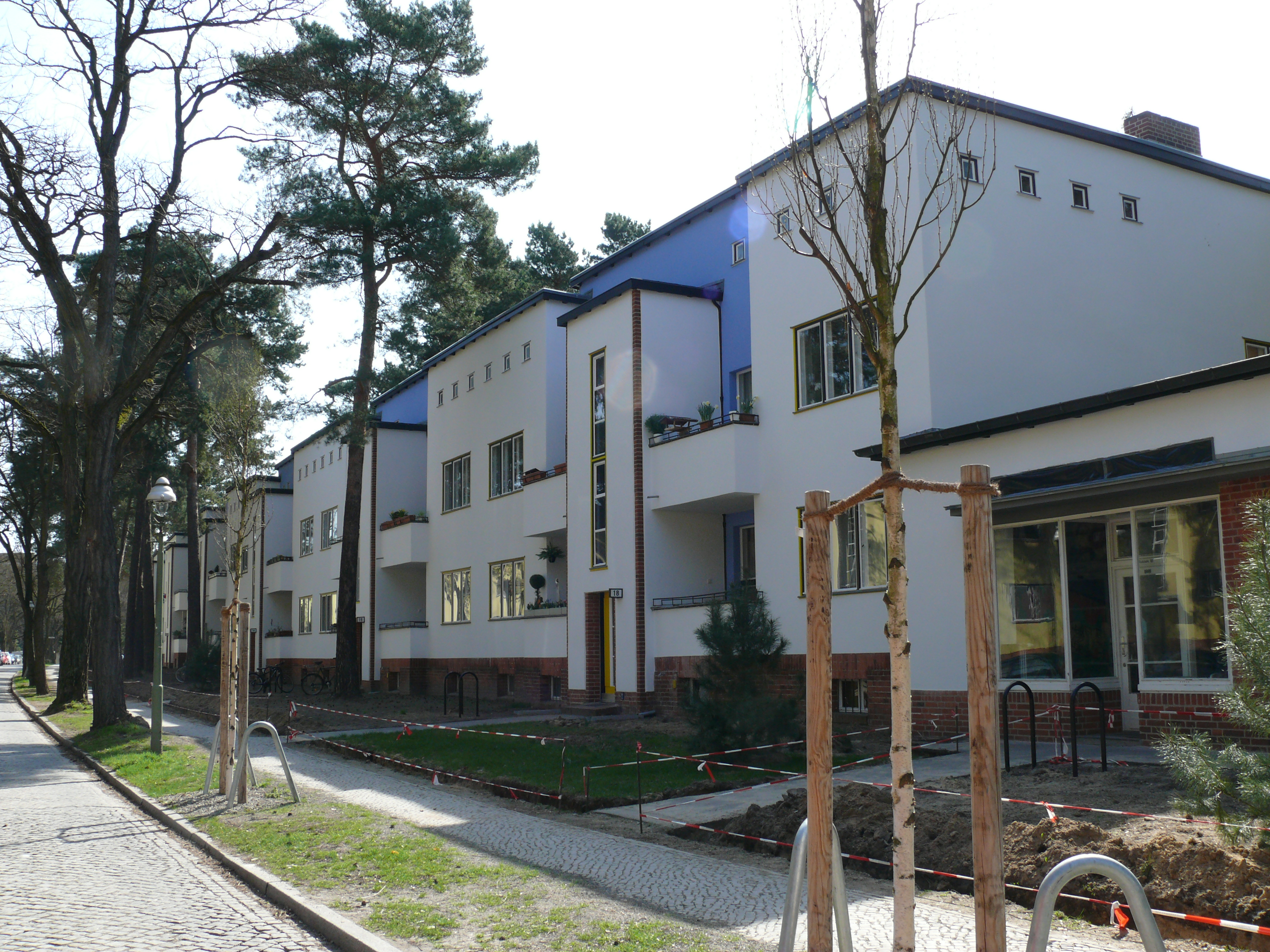
Siedlung Onkel Toms Hütte (1926–1931)
Other characteristics: Flat Roof • Setback & Front Garden • Bright Colors

Siedlung Italienischer Garten (1924-1926)
Other characteristics: Flat Roof • Bright Colors
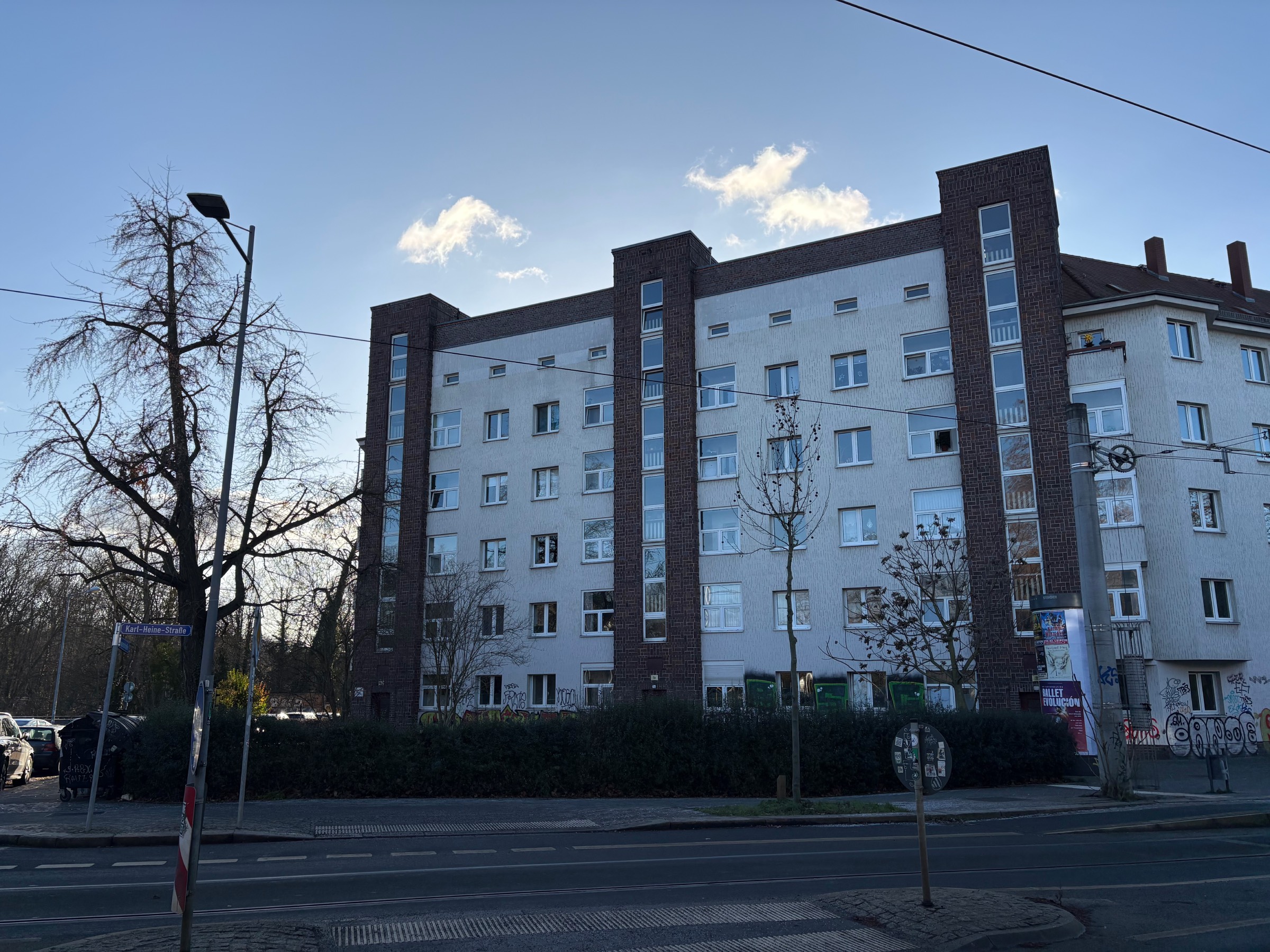
Simple plaster facade from 1935. The original windows have been replaced with plastic-frame windows without muntins, making the whole facade appear less cohesive.
Other characteristics: Clinker Bricks
Expressionism
Expressionist buildings usually show more ornament, but of a different kind than earlier historicism. Instead of classical columns or baroque moldings, they used sgraffiti, zigzags and chevrons, and small Art Deco elements.
Even so, the overall surface remains comparatively calm. Large areas of plain plaster dominate, in clear contrast to the fragmented, highly articulated façades of the Gründerzeit.
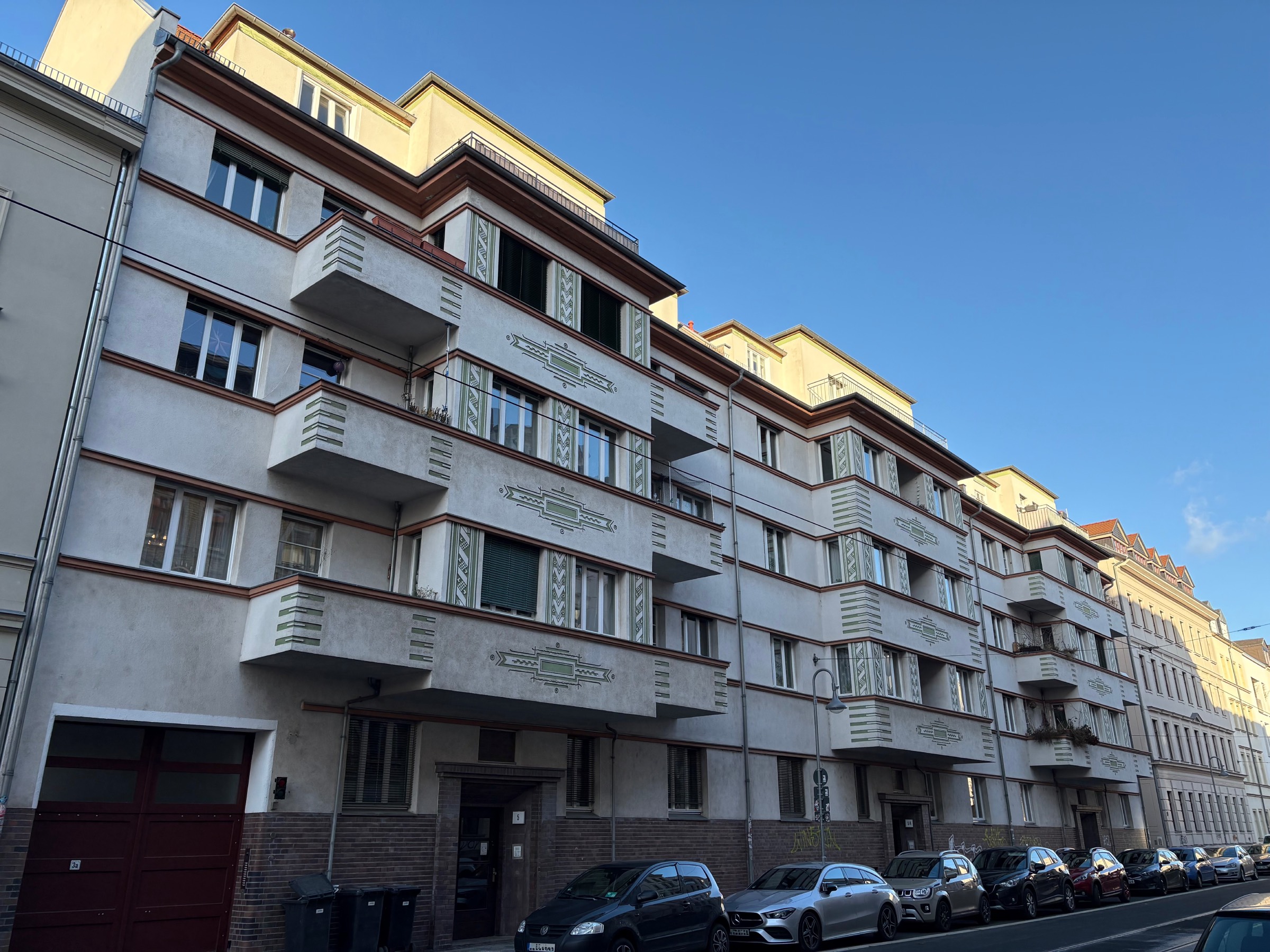
Facade with green Sgraffiti
Other characteristics: Sgraffiti
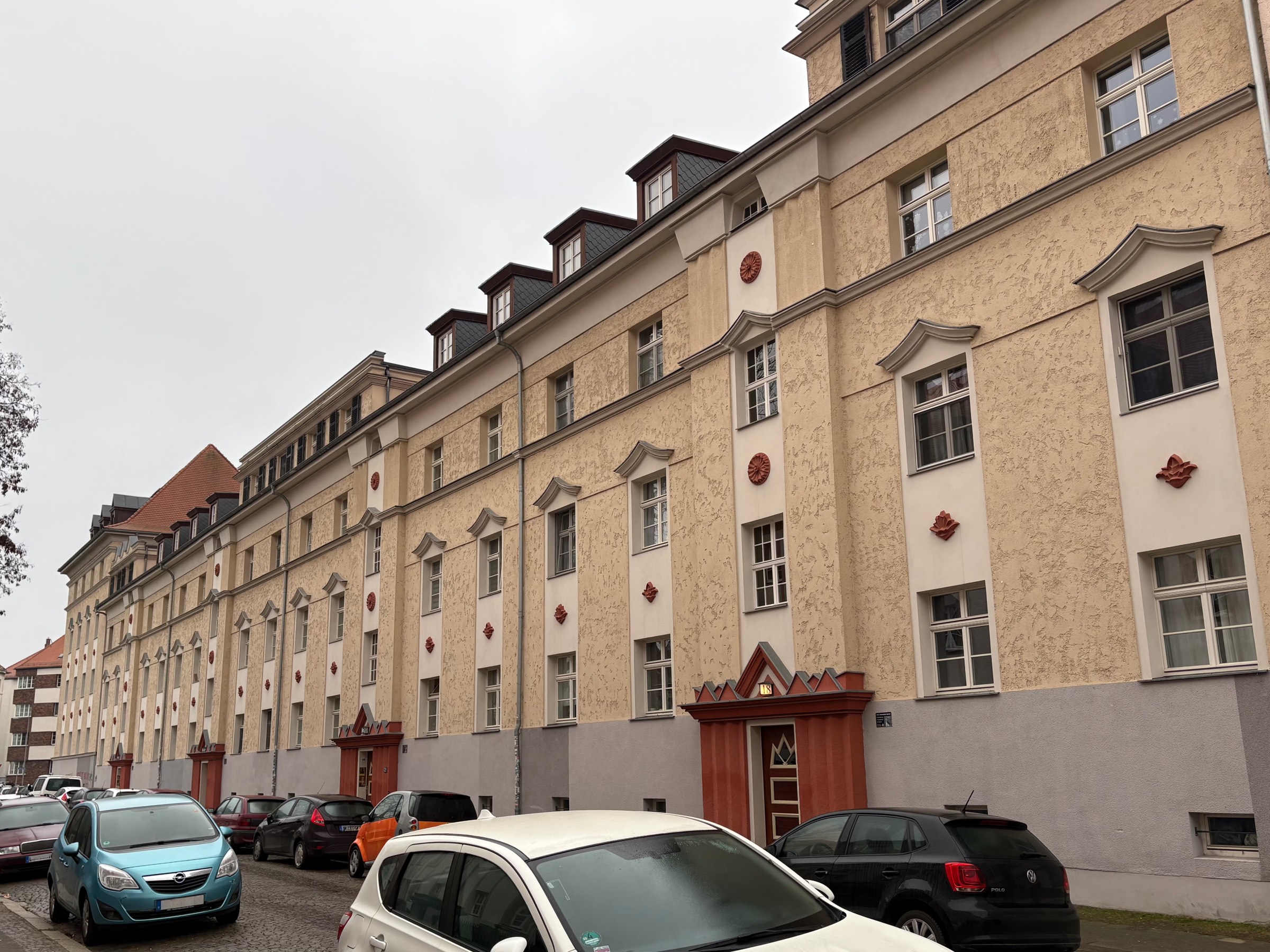
Ornate Expressionist facade with small Art Deco elements
Other characteristics: Zigzags & Chevrons
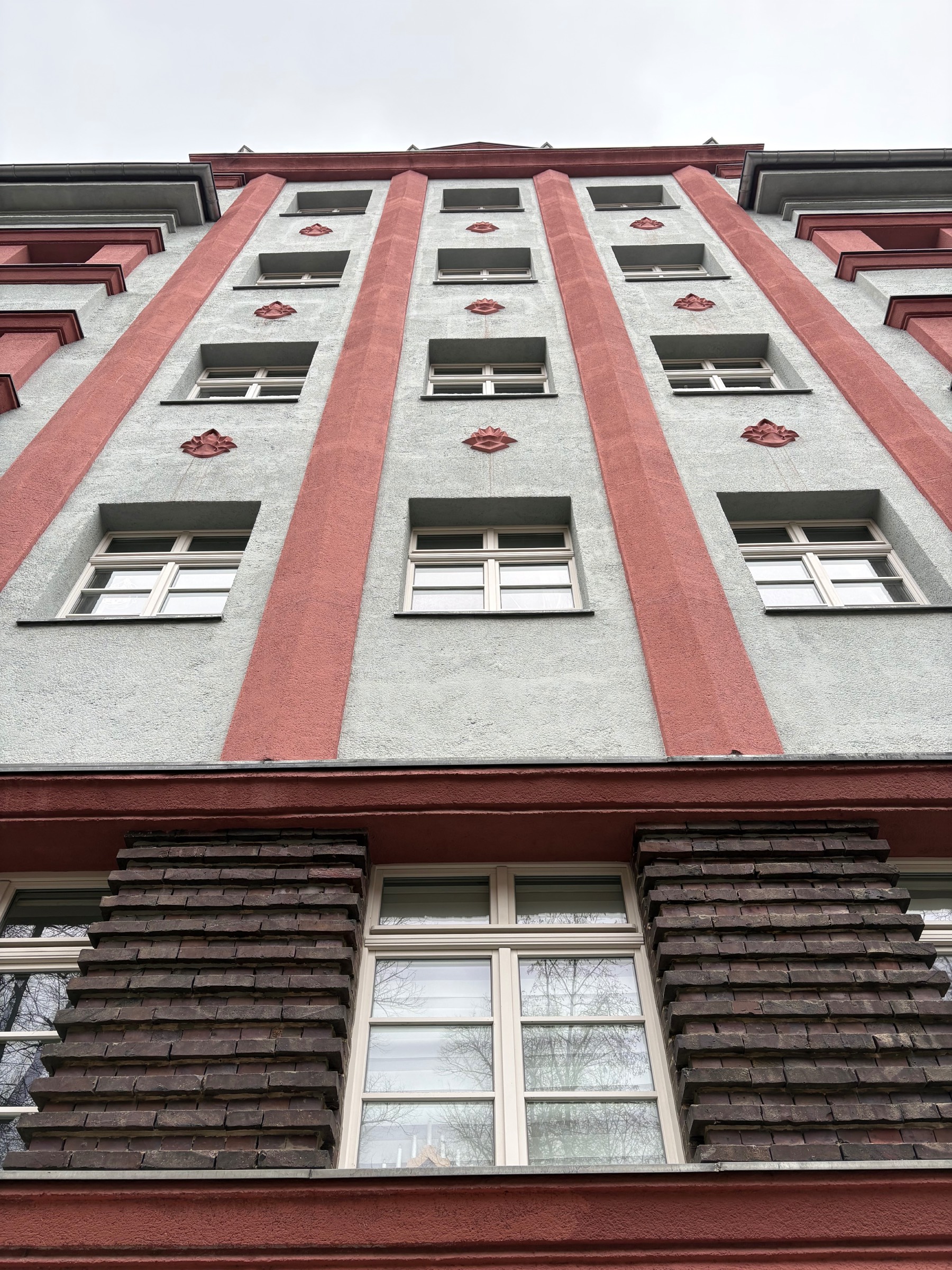
Façade from 1925 with Art Deco ornaments and lesenes, but still dominated by large plain plaster areas
Other characteristics: Clinker Bricks • Bright Colors
Traditionalism
Even traditionalist architects favored simpler façades. The Heimatschutzstil (homeland preservation style) called for a rejection of late historicism, not a return to it. Instead, it emphasized proportion, roof shapes, and familiar building types over surface decoration.
Regional materials, symmetry, and gabled roofs became central, while façades remained restrained and largely plastered.

Town hall from 1930
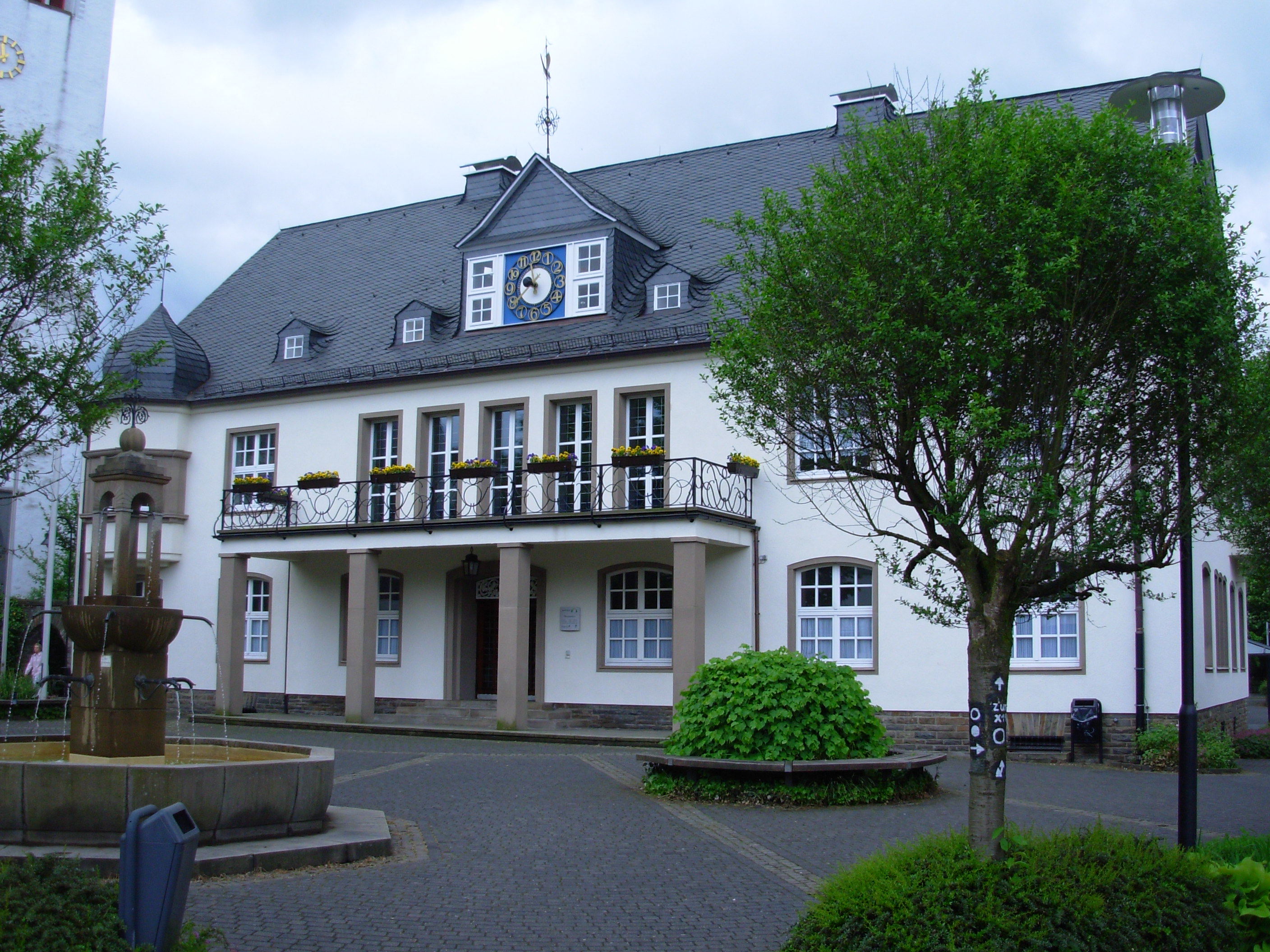
Town hall from 1939
There were exceptions. Housing cooperatives in particular often remained conservative and sometimes incorporated older stylistic elements. This example from Leipzig shows curved forms reminiscent of Jugendstil. Even here, however, the façade is far more restrained than prewar buildings.
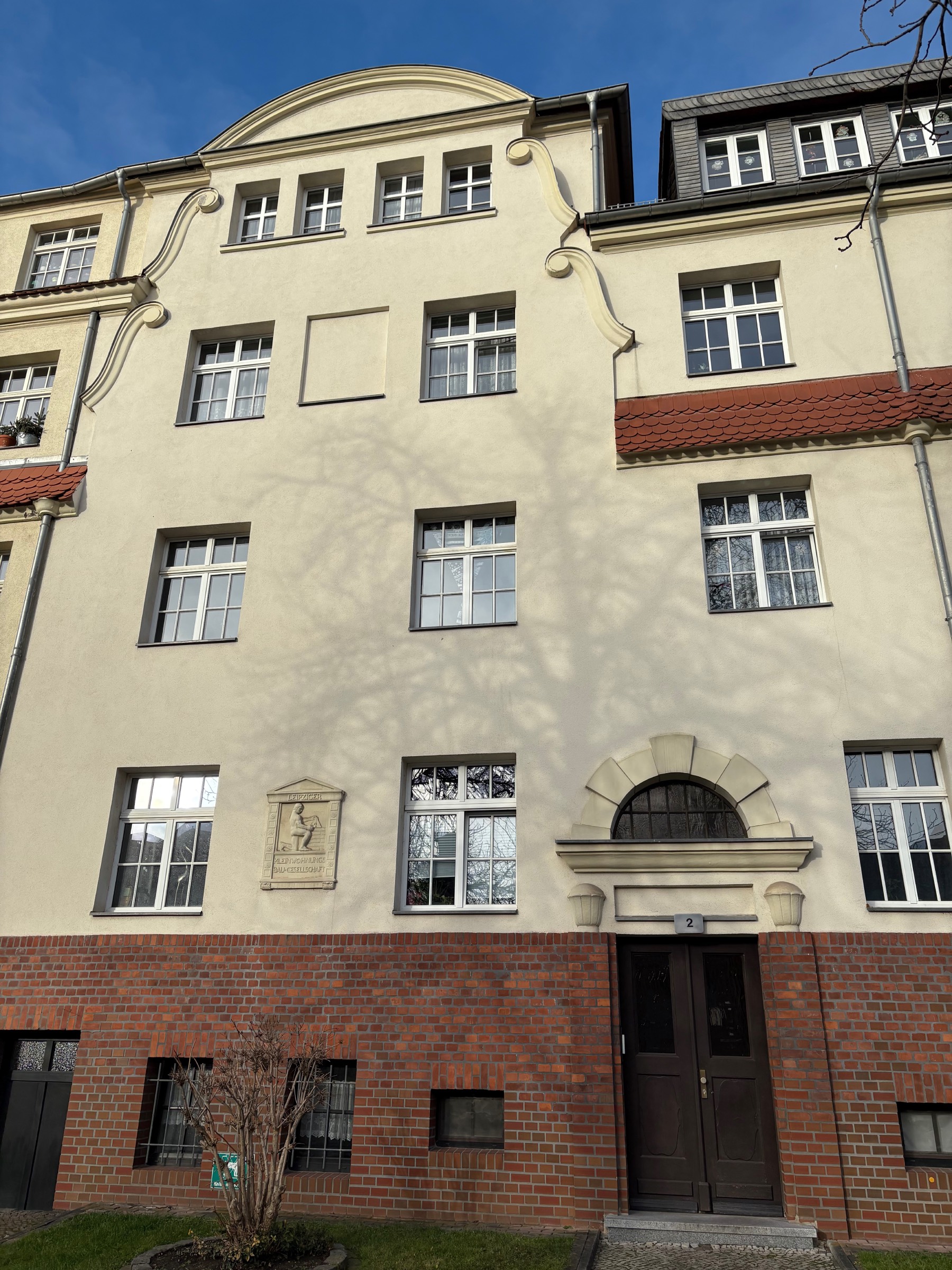
Housing cooperative building from 1933 with Jugendstil influences
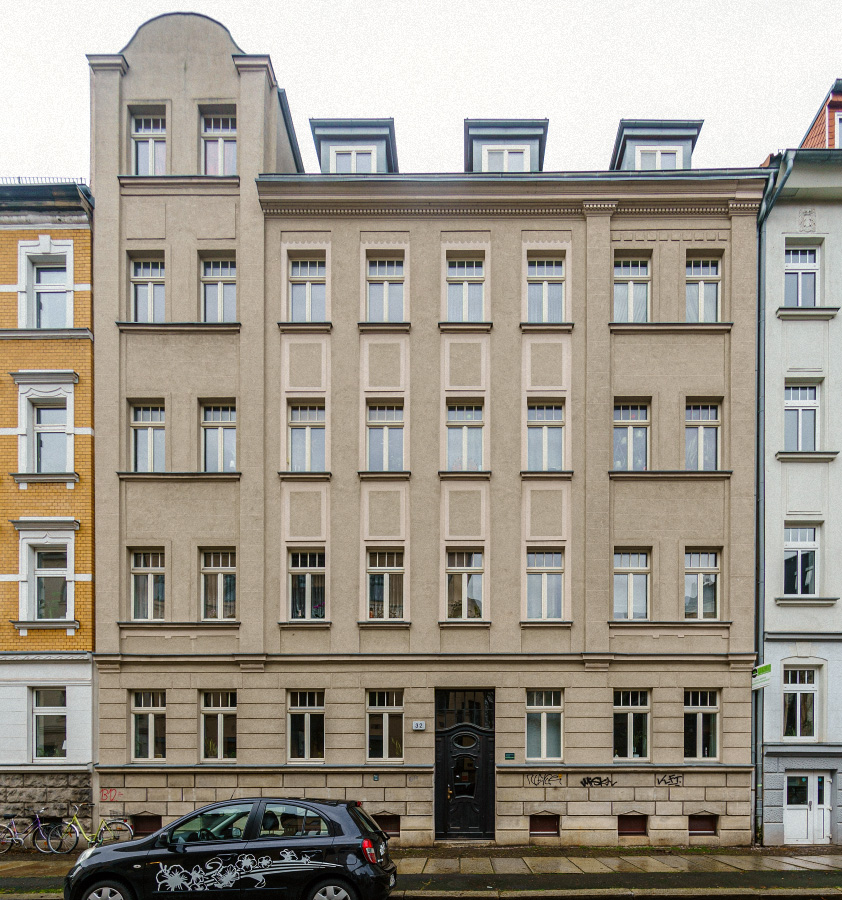
Residential building from 1915. Although restrained for its time, it still shows historicist details such as the stone texture base and decorative pilasters.
Distinguishing it from Postwar Modernism
Simple plaster façades continued to be common after the Second World War, especially in the 1950s and 1960s. In addition, many older buildings in West Germany were later stripped of their ornament in a process known as Entstuckung.
For this reason, simple plaster façades alone are not enough to date a building. Other features should be considered as well, such as window proportions, original frames and muntins, entrance design, materials, and overall composition. Some of these elements may have been altered over time, which makes careful observation necessary.