Flat Roofs
–Functionalism–
With the availability of new building materials such as concrete and steel, architecture in the Weimar Republic saw a shift in roof design. While traditional hip and gable roofs remained dominant, modernist movements increasingly introduced flat roofs as an alternative and a form-follows-function approach.
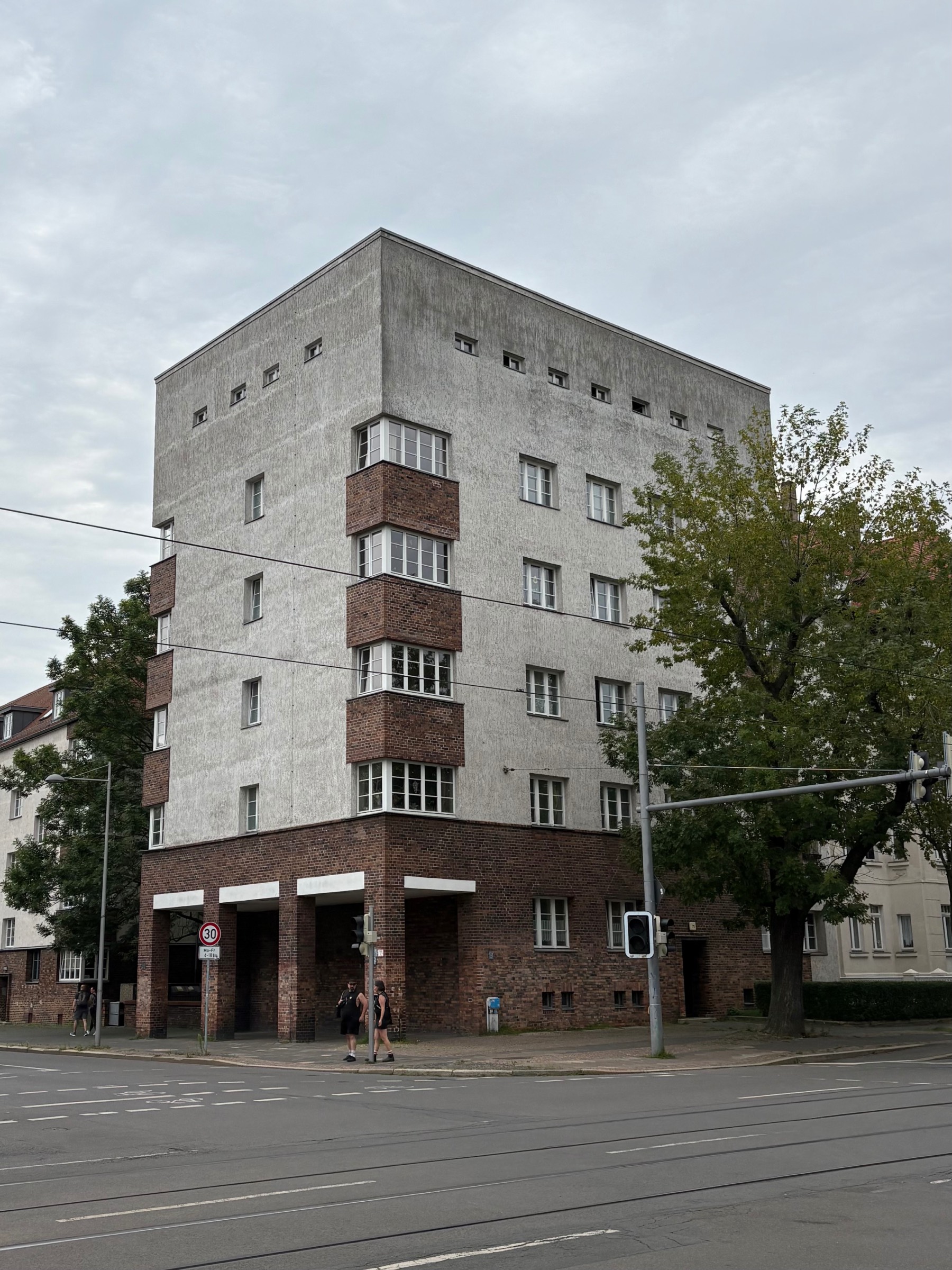
Residential building from 1930 with a flat roof
Other characteristics: Clinker Bricks • Corner Windows
This shift in roof design was not uniform across the modernist architecture in the Weimar Republic and brought with it a deeper cultural debate.
- Critics of pitched roofs viewed them as a symbol of nostalgia for rural life, rejecting urban modernity and the pressing need for efficient housing. They argued that steep roofs wasted valuable space and represented an outdated, space-consuming approach to construction.
- Critics of flat roofs, on the other hand, saw them as a foreign influence, detached from local building styles. They called for a return to familiar, proven forms.
One of the most notable manifestations of this debate took place in Zehlendorf (Berlin), where two contrasting housing projects were developed in close proximity:
- Onkel-Tom-Siedlung, designed between 1926-1931, embraced flat roofs as a modern and functional choice. It sparked controversy as Zehlendorf at the time was characterized by historicist mansions and traditional suburban architecture.
- Siedlung am Fischtalgrund, built in 1928, mandated the use of gable roofs, explicitly opposing the flat-roofed aesthetic. It represented a deliberate counterpoint not only to the Onkel-Tom-Siedlung but also the radical modernism of the 1927 Weissenhof Estate in Stuttgart.
A similar debate took place in Leipzig during the planning of the Rundling. Initially, the use of flat roofs faced resistance and the architect was only able to convince the planning committee after proving that flat roofs were more cost-effective than steep ones.
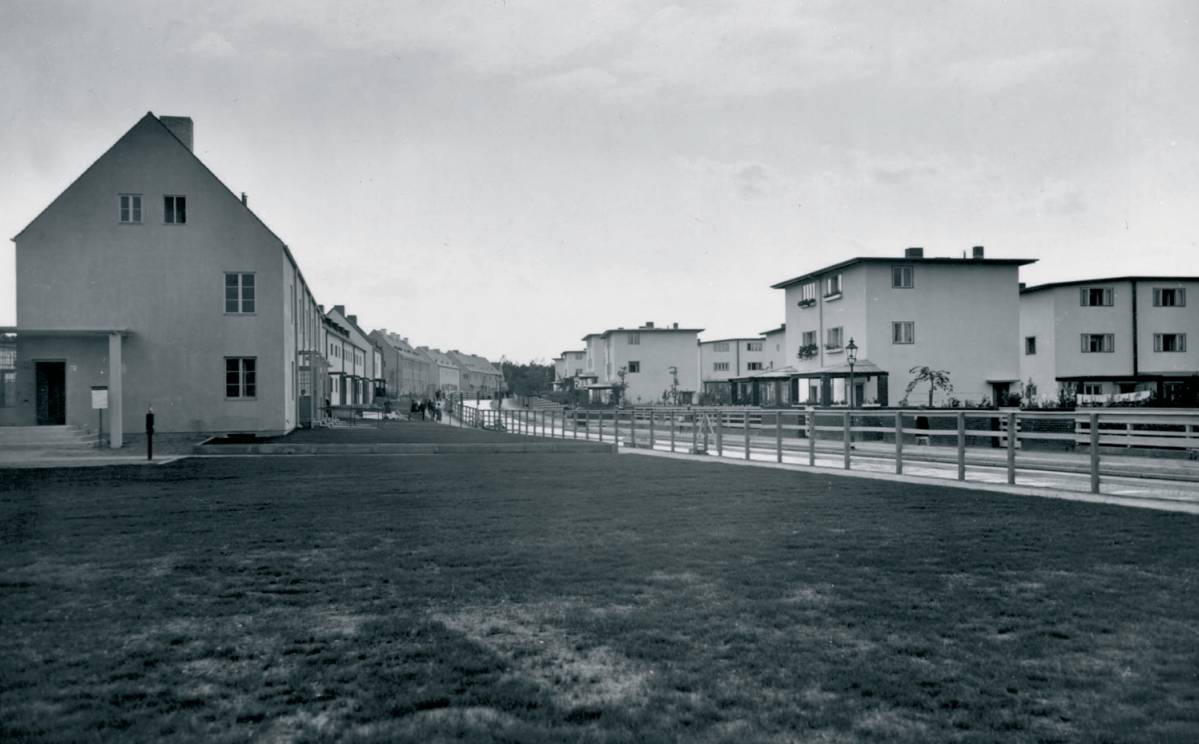
Gable roofs of Siedlung am Fischtalgrund (left) and flat roofs of Onkel-Tom-Siedlung (right)
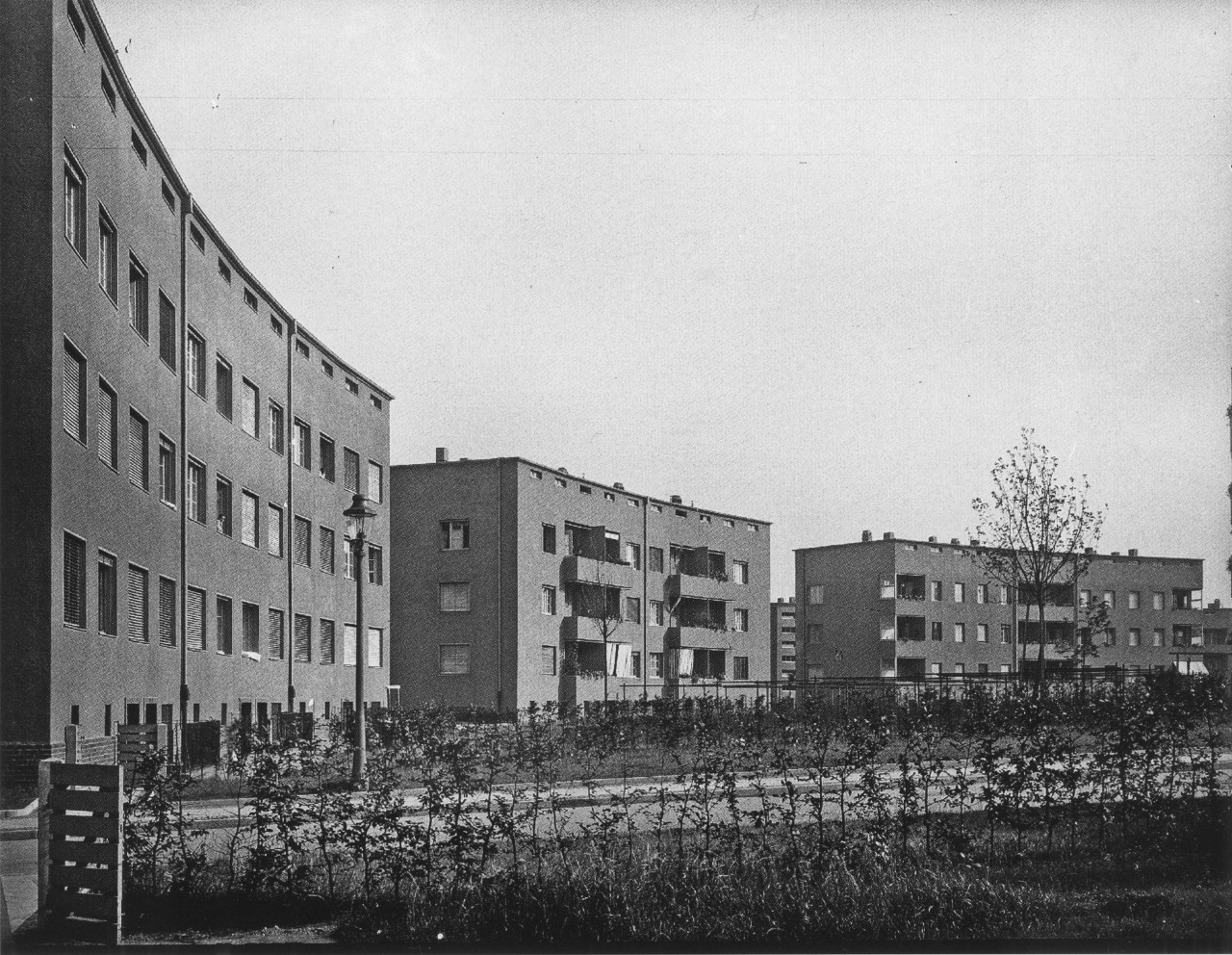
Rundling (1929-1930) in Leipzig
Interestingly, even leading proponents of flat roofs, such as Bruno Taut (Onkel-Tom-Siedlung) and Ernst May (New Frankfurt), were not rigid in their approach. In some cases, pitched roofs were incorporated to better integrate with the surrounding architecture. One example is Bornheimer Hang in Frankfurt, where Ernst May’s otherwise flat-roofed developments featured steep gable roofs where necessary.
In general, flat roofs were primarily seen in new housing estates on the outskirts of cities, where there were fewer architectural constraints and therefore less resistance. In contrast, developments closer to existing urban centers often adapted to the surrounding roofscape, blending modernist ideals with the more traditional forms.
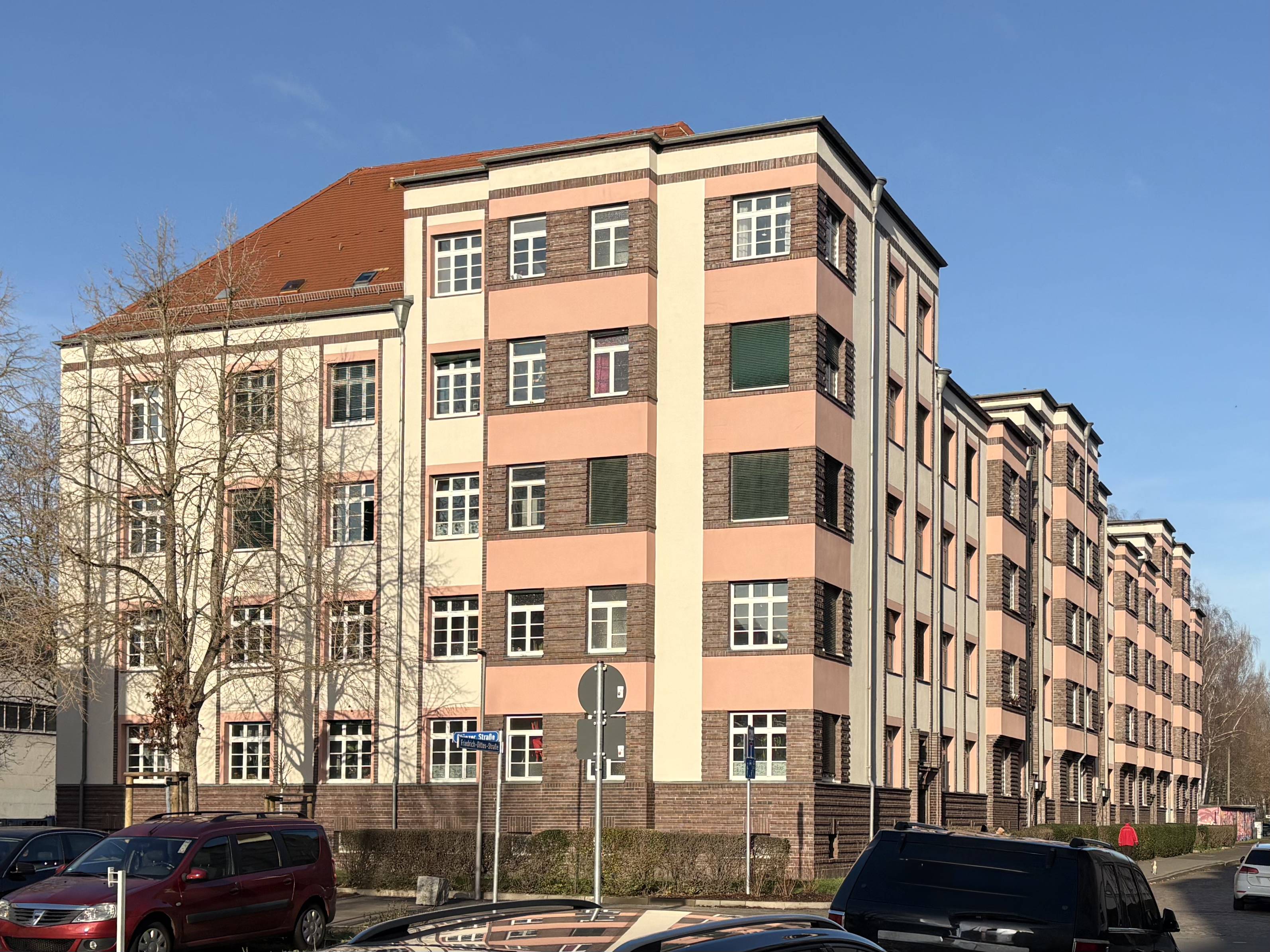
Apartment building from 1930 with a mix of gable and flat roofs
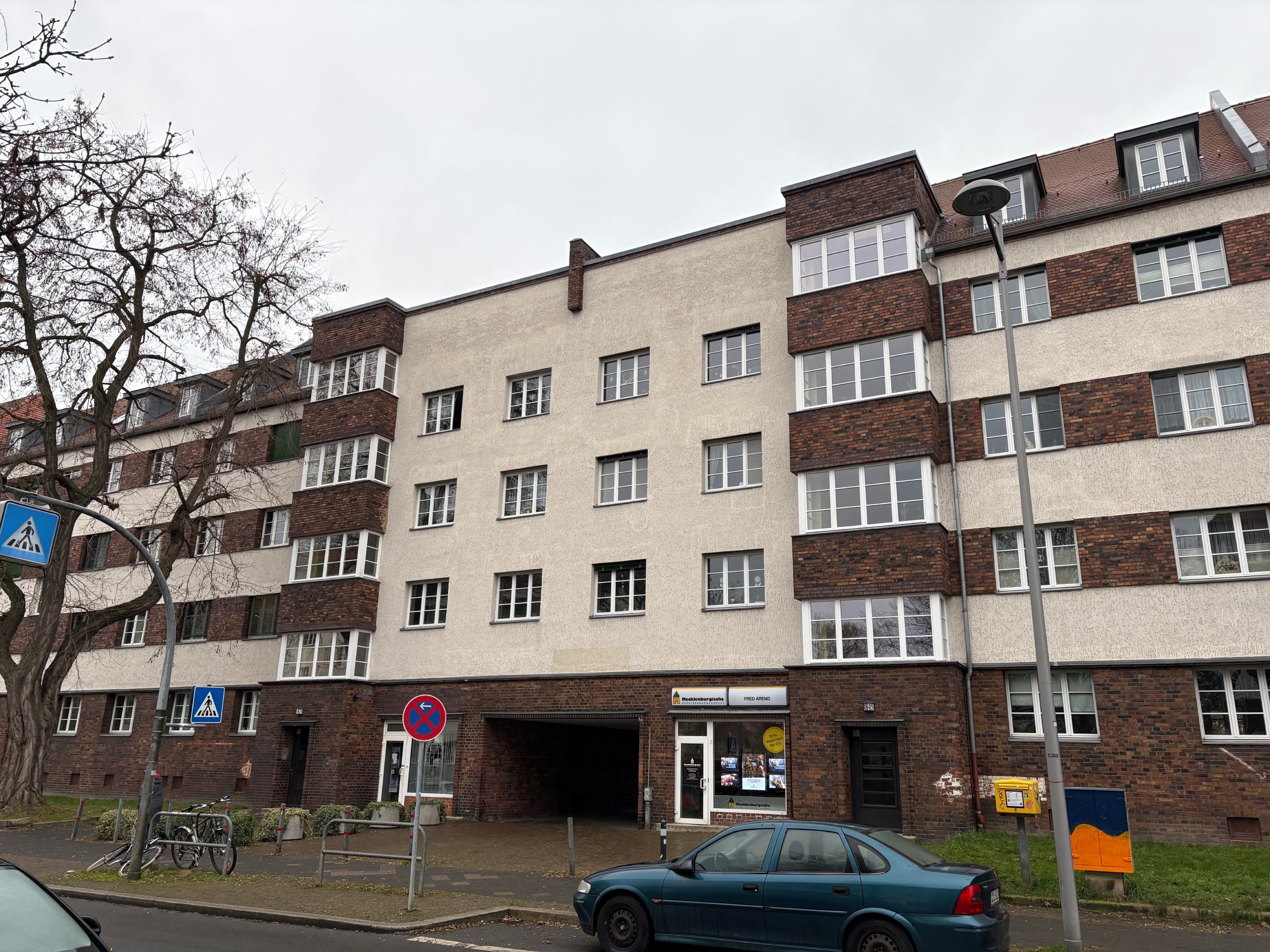
Apartment building from 1929 with a mix of gable and flat roofs