Sgraffiti
Sgraffiti are decorative images applied to building façades by scratching through an upper layer of plaster to reveal an underlying layer in a contrasting color.
Sgraffiti have been used since the Middle Ages and reappeared in the early 20th century, partly through the influence of Art Nouveau. During the Weimar Republic they were used both in Expressionist architecture, as well as more traditionalist buildings.
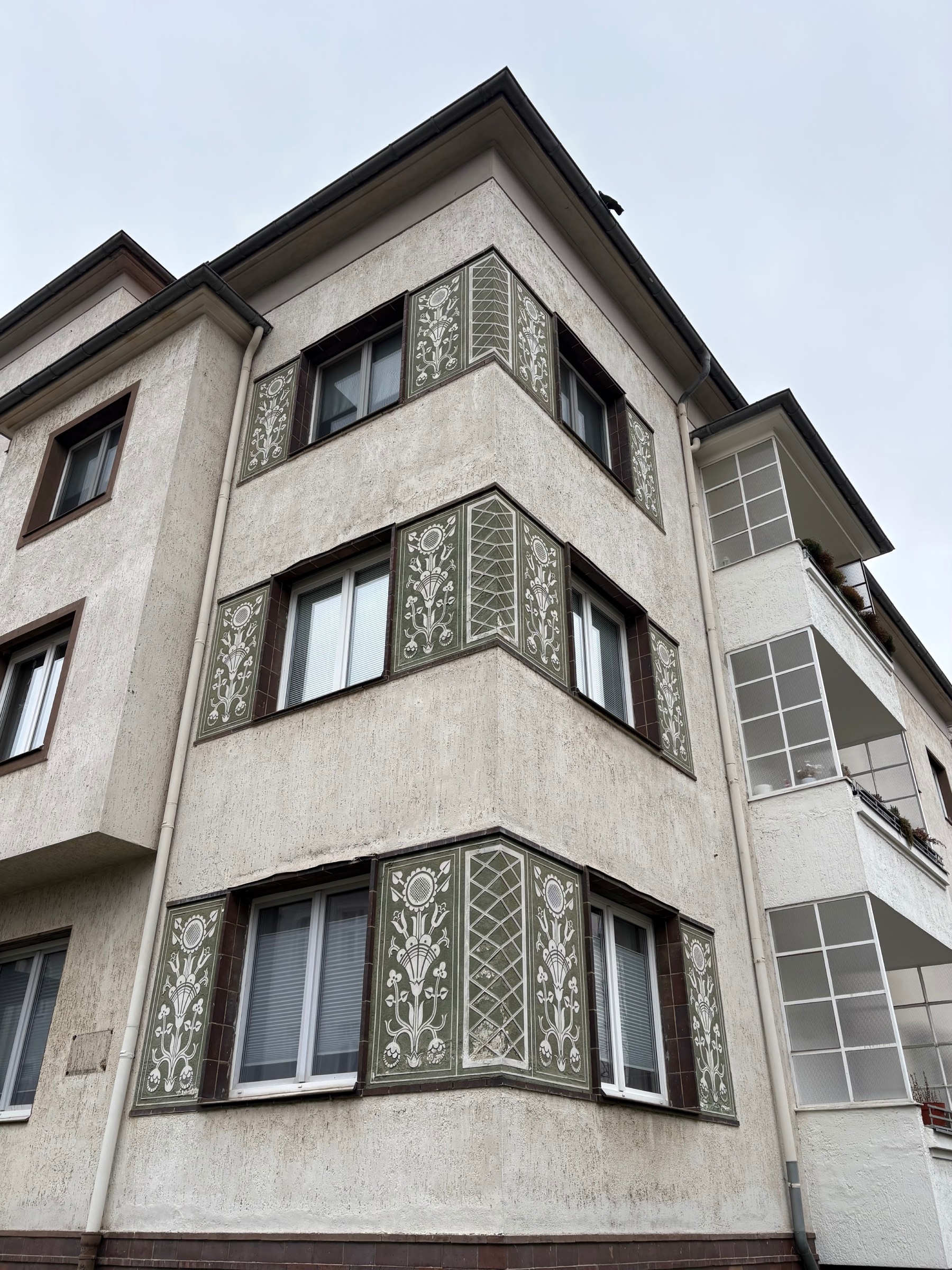
Sgraffiti around windows on the corner of a residential building from 1925
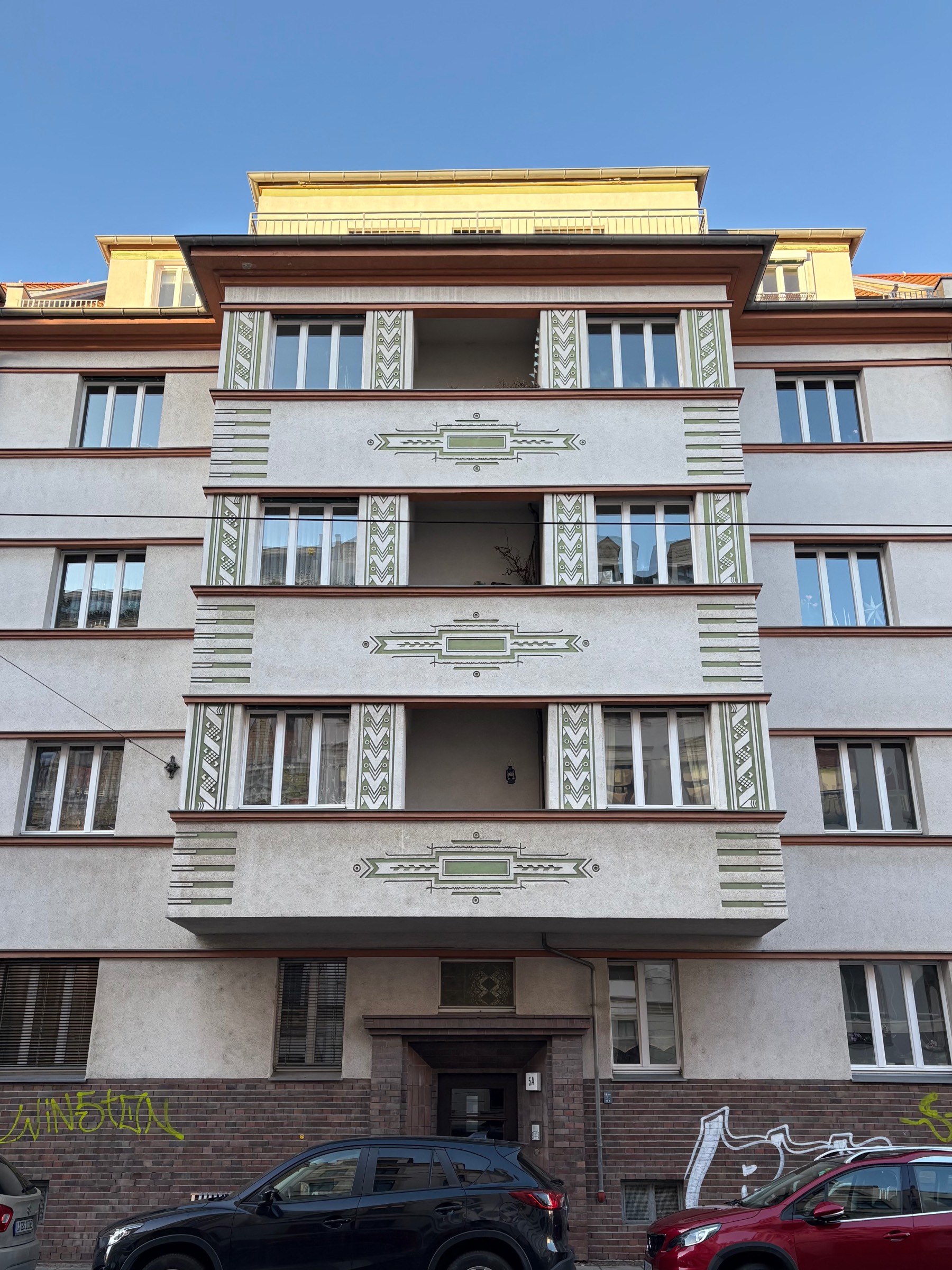
Ornamental sgraffiti on the balconies of an Expressionist building from 1936
In 1928, Prussia introduced a law that required a percentage of a building’s construction budget to be spent on visual arts. This regulation was taken over by the National Socialists in the 1930s, and contributed to the continued use of sgraffiti. (Source, page 10)
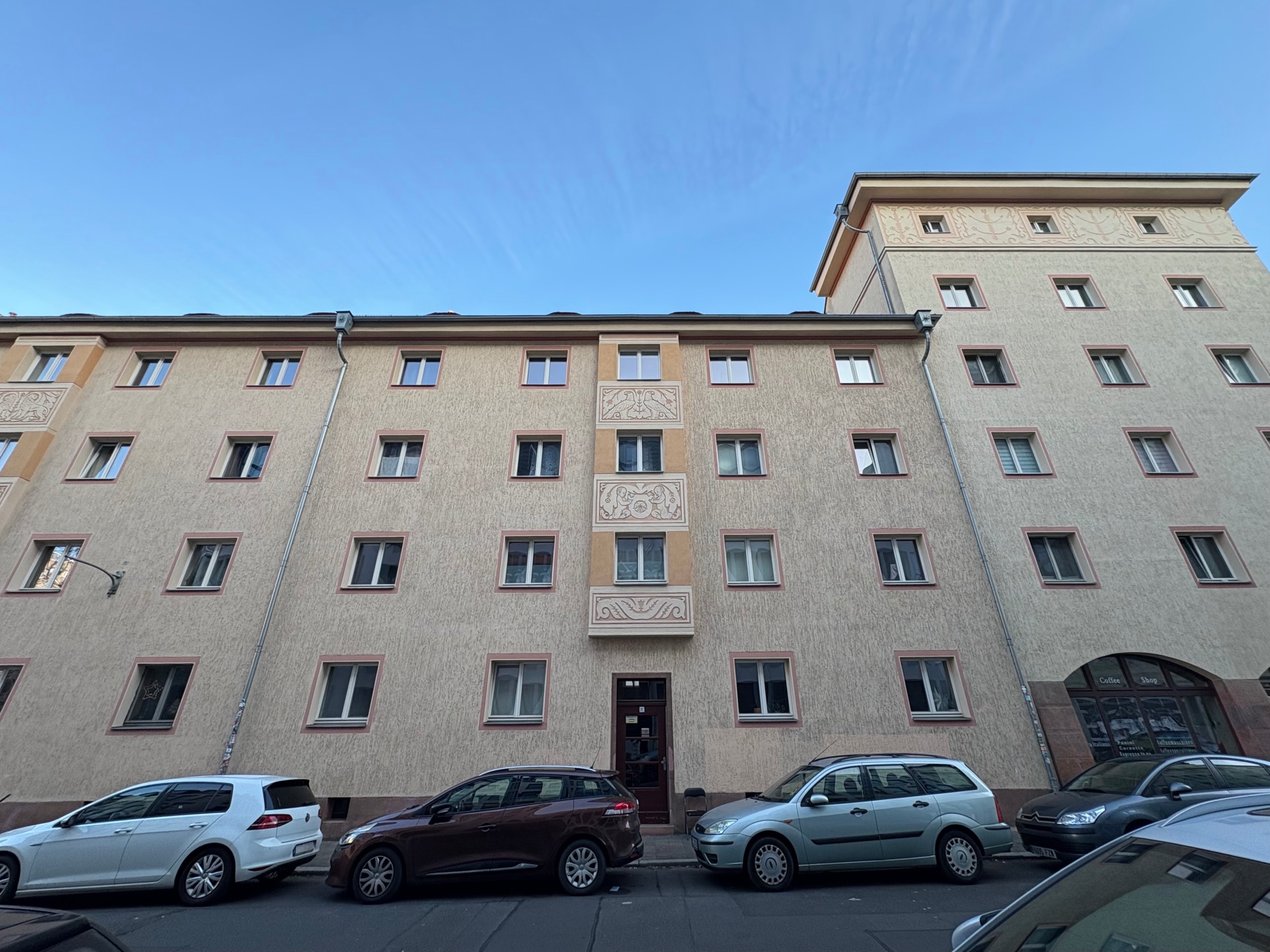
Simple plaster façade with sgraffiti highlighting the staircase windows and roofline (1935-1936). The original windows have been replaced by plastic-frame windows without muntins.
Other characteristics: Simple Plaster Facade • Wood and Glass Front Door
Sgraffiti are not limited to the 1920s and 1930s. They appear both earlier and later, and especially buildings from the 1950s and 1960s can be mistaken for Weimar-era architecture. These later buildings often share other features as well, such as simple plaster façades and flat roofs. Clinker bricks and front doors made of wood are less common in postwar buildings and can therefore help distinguish architecture of the 1920s and 1930s from later modernism.

Sgraffito on a postwar building from 1956